


Doors - Pocket
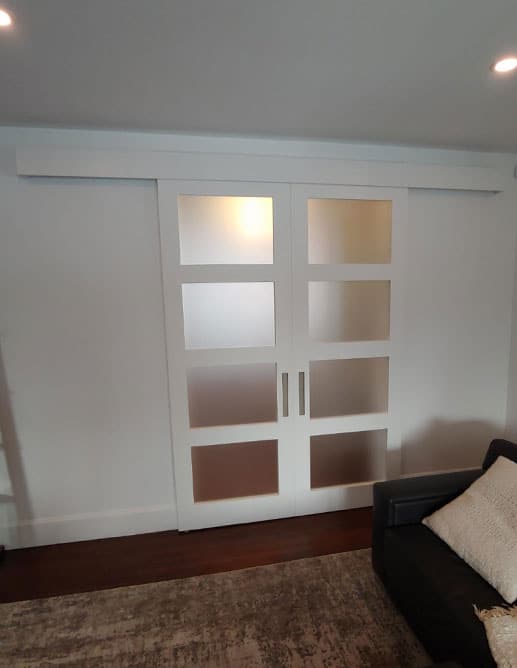
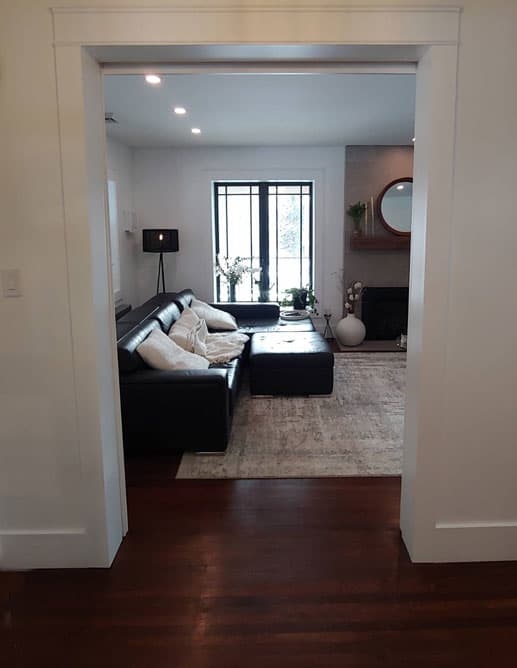
Pocket door – ref. 002633
Project: 002633
Invisible once open, a solid wood pocket door slides into the partition to free floor space. Built to order in our St-Eustache workshop.
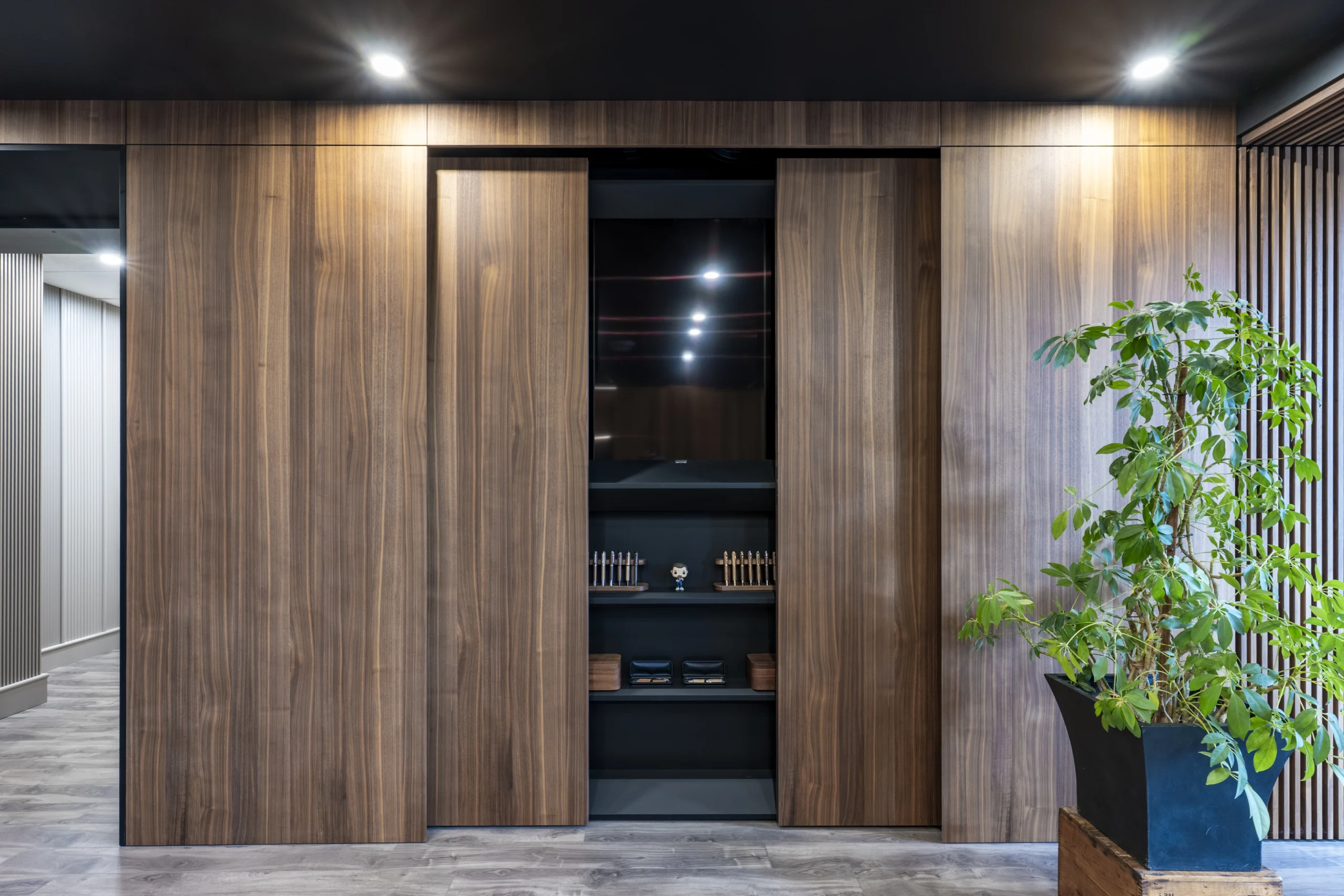
A pocket door slides inside the partition instead of pivoting into the room. Result: zero floor footprint, zero clearance required, and an invisible transition between two spaces. In solid wood, this door retains the acoustic insulation, the weight and the sense of quality that hollow-core models cannot offer. At MICHELENA, we have built custom pocket doors for more than 20 years. Solid panels, glazed or with moldings. In white oak, walnut or mahogany. Format, species and profile are adapted to the project.

The door slides on a rail hidden inside a metal pocket frame integrated into the partition. Open, it disappears entirely. Closed, it behaves like a classic swing door, with the same visual presence and the same insulation.
Galvanized steel pocket frame, embedded in the partition during construction or renovation. Upper ball-bearing rail for silent, fluid movement. Discreet floor guide to keep panel alignment. Standard panel thickness is 1¾ inches for residential applications.
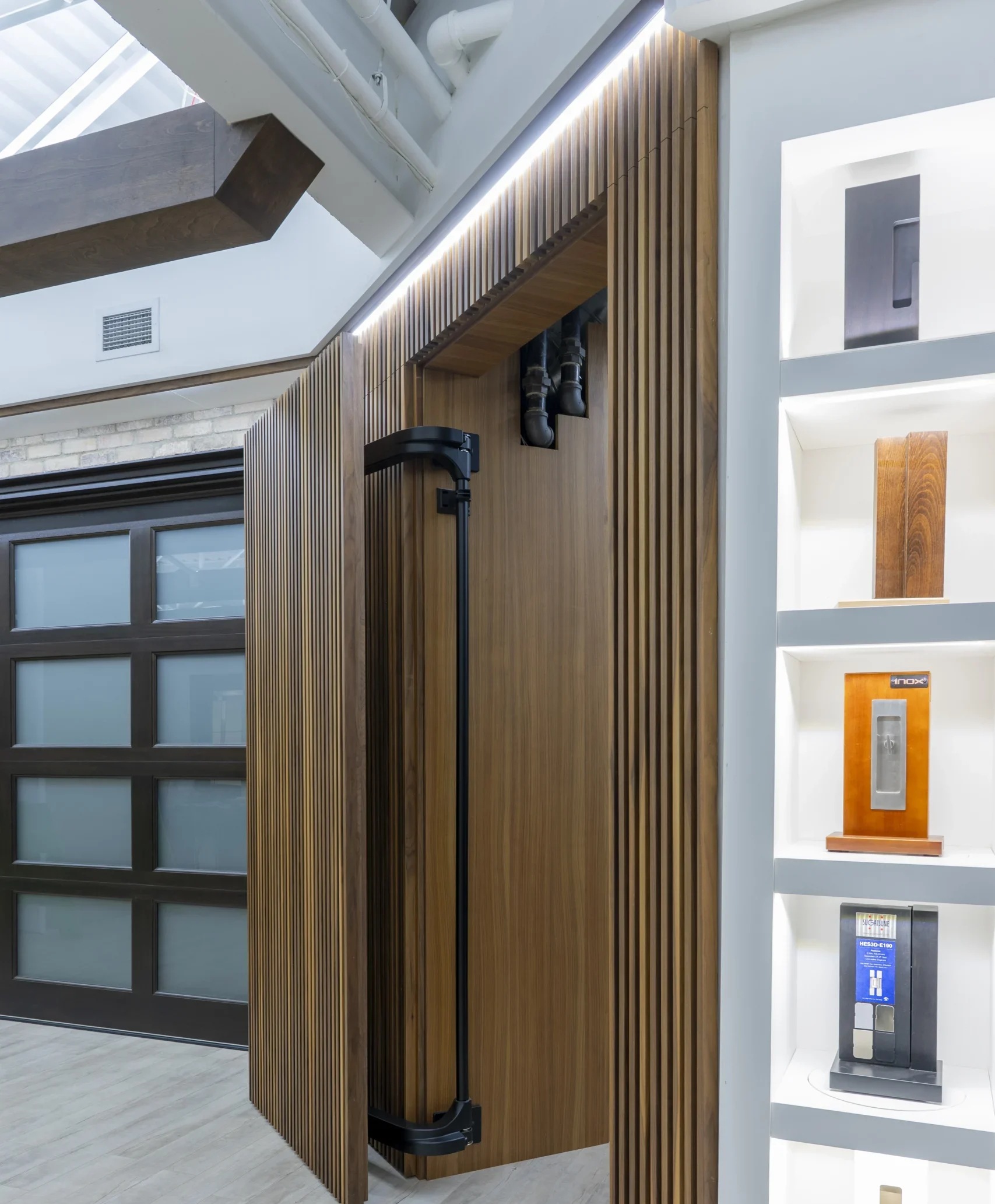
The complete system is delivered ready to install, with every component needed for durable operation.
Market pocket doors are often hollow-core, light and noisy. Here is what solid wood changes.
No swing arc, no clearance required. Space in front of and behind the door stays fully free. Ideal for small rooms, corridors and open living spaces.
At 1¾ inches thick in solid wood, the door significantly reduces sound between rooms. Hollow-core models let sound through. The difference is felt the moment it closes.
Weight, texture and sound at closing. A solid wood pocket door moves fluidly on the rail and closes with confidence. No vibration, no rebound.
Four steps to integrate a pocket door into the home. The pocket frame must be planned during construction or partition renovation.
Exchange on location, dimensions and desired style. Check of the partition structure to receive the pocket frame. Builder’s plans welcome.
Technical drawing of the panel and the pocket frame. Validation of species, molding profile, handle type and closing system.
Panel built in our St-Eustache workshop, RBQ-licensed. Supply of the galvanized steel pocket frame sized for the panel.
The pocket frame is installed by the builder during the framing phase. The panel is fitted once wall finishes are complete. Rail and floor guide adjustment.
Browse pocket door installations integrated into the partition. Single or double, with overhead rail and soft-close.
1 of 1 projects
A pocket door disappears into the wall, but five technical questions always come back from clients ordering one. Here are the answers.
Yes, but it requires rebuilding the partition section that will house the pocket frame. The wall must be opened to insert the metal pocket, then closed and refinished. It is a more common renovation than it sounds.
In 1¾-inch solid wood, acoustic insulation is comparable to a swing door of the same thickness. To maximize soundproofing, a perimeter joint and a lipped threshold can be added.
Standard widths are 24, 28, 30, 32 and 36 inches. Since our doors are built to order, any non-standard dimension is feasible, including oversized formats for 42-inch and larger openings.
Yes. A hook lock system built into the recessed handle allows locking from the inside. Ideal for bathrooms and bedrooms.
Clean the rail once a year to remove accumulated dust. Lubricate the bearings if the movement loses fluidity. The wood panel is maintained like any interior door: gentle cleaning and finish touch-up as needed.
Tell us about the project. Location, partition dimensions, desired style. Our team prepares a detailed quote including the panel and the pocket frame.